Begin of page section:
Page sections:

  • Go to contents (Accesskey 1)
  • Go to position marker (Accesskey 2)
  • Go to main navigation (Accesskey 3)
  • Go to sub navigation (Accesskey 4)
  • Go to additional information (Accesskey 5)
  • Go to page settings (user/language) (Accesskey 8)
  • Go to search (Accesskey 9)

End of this page section. Go to overview of page sections

Begin of page section:
Page settings:

English en
Deutsch de
Search
Login

End of this page section. Go to overview of page sections

Begin of page section:
Search:

Search for details about Uni Graz
Close

End of this page section. Go to overview of page sections


Search

Begin of page section:
Main navigation:

Page navigation:

  • University

    University
    • About the University
    • Organisation
    • Faculties
    • Library
    • Working at University of Graz
    • Campus
    Developing solutions for the world of tomorrow - that is our mission. Our students and our researchers take on the great challenges of society and carry the knowledge out.
  • Research Profile

    Research Profile
    • Our Expertise
    • Research Questions
    • Research Portal
    • Promoting Research
    • Research Transfer
    • Ethics in Research
    Scientific excellence and the courage to break new ground. Research at the University of Graz creates the foundations for making the future worth living.
  • Studies

    Studies
    • Prospective Students
    • Students
  • Community

    Community
    • International
    • Location
    • Research and Business
    • Alumni
    The University of Graz is a hub for international research and brings together scientists and business experts. Moreover, it fosters the exchange and cooperation in study and teaching.
  • Spotlight
Topics
  • Our digital Advent calendar
  • Sustainable University
  • Researchers answer
  • Work for us
Close menu

End of this page section. Go to overview of page sections

Begin of page section:
You are here:

University of Graz surface-science.uni-graz.at News New FWF – WEAVE Project "Longer Acenes: Synthesis, Interfaces, and Thin Films"
  • Surface Science
  • Research Topics
  • Methods
  • Publications
  • Team
  • Jobs
  • Institute of Physics

End of this page section. Go to overview of page sections

Friday, 28 November 2025

New FWF – WEAVE Project "Longer Acenes: Synthesis, Interfaces, and Thin Films"

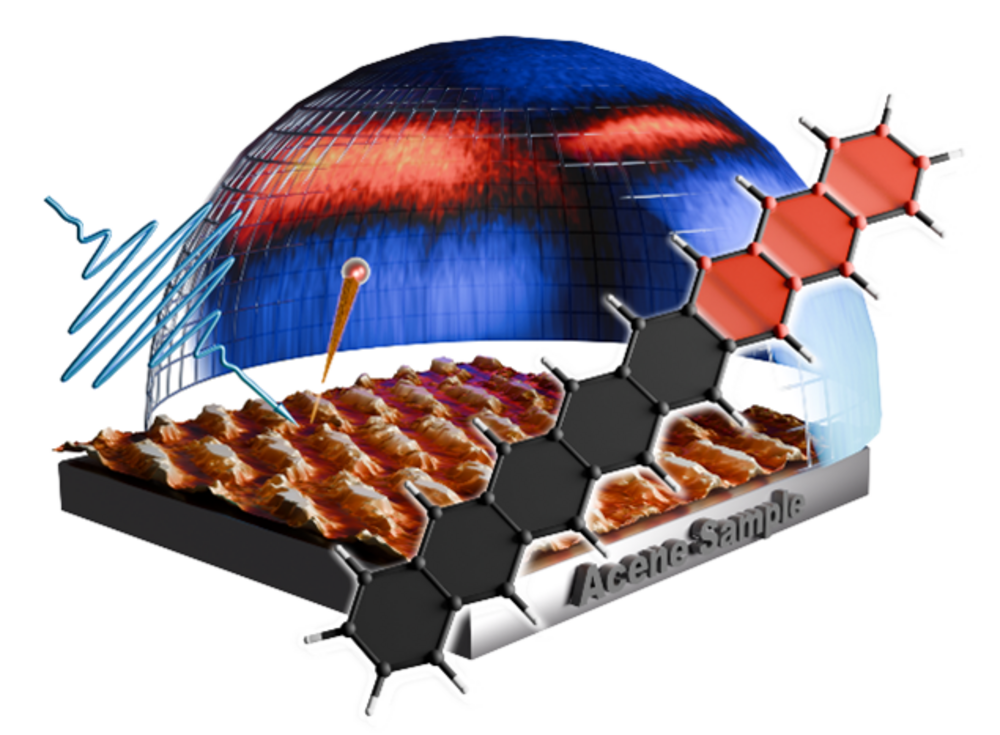
The international FWF program, coordinated by Assoc. Prof., is dedicated to the chemical synthesis, experimental characterization, and theoretical modelling of longer acenes, aiming to explore their potential for the development of high-performance organic semiconductors. ©Uni Graz / Windischbacher

The international FWF program, coordinated by Georg Koller, is dedicated to the chemical synthesis, experimental characterization, and theoretical modelling of longer acenes, aiming to explore their potential for the development of high-performance organic semiconductors.- Image: Uni Graz / Windischbacher

Unlocking the Potential of Longer Acenes: A New Era in Organic Electronics

Acenes, a class of hydrocarbons with linearly fused benzene rings, are key to organic electronics. Molecules like pentacene (five benzene rings) are widely used in transistors and solar cells. Beyond applications, acenes interest researchers in nanoscience, theoretical chemistry, and physics, where they are seen as one-dimensional analogs of graphene or carbon nanotubes. Longer acenes, such as hexacene, heptacene, and octacene, hold promise as high-performance organic semiconductors due to their exceptional electronic properties. However, their high reactivity and instability pose challenges for synthesis and application.

This collaborative project between the University of Graz (Austria) and the University of Tübingen (Germany) focuses on synthesizing and studying longer acenes, from hexacene to octacene. The aim is to systematically investigate their growth, structure, and electronic properties, from individual molecules to thin films. To address their reactivity, new fluorinated derivatives will be developed to enhance stability. These efforts will assess the feasibility of using longer acenes and their derivatives in organic electronic devices.

The project employs advanced experimental and theoretical techniques. Scanning tunnelling microscopy (STM) will visualize individual molecules at the atomic level by measuring electron tunnelling between a sharp tip and a surface. Photoemission orbital tomography (POT), based on angle-resolved photoemission spectroscopy, will provide insights into electronic structure, molecular orbitals, and adsorption geometry. POT involves irradiating a surface with monochromatic photons and analyzing emitted photoelectrons, offering a powerful tool for understanding molecular interactions.

Theoretical ab-initio density functional theory (DFT) calculations will simulate the electronic structure of acenes, complementing experimental data by predicting orbital-projected density of states, STM images, and photoemission angular distributions.

This interdisciplinary project unites experts in chemistry, physics, and materials science. The chemical synthesis of acenes and their fluorinated derivatives will be conducted by Prof. Bettinger’s group at the University of Tübingen. Experimental studies will be led by Prof. Koller (University of Graz) and Prof. Peisert (University of Tübingen), while theoretical modelling will be carried out by Prof. Puschnig’s team at the University of Graz.

By tackling the challenges of synthesizing and stabilizing longer acenes, this project aims to unlock their potential as active materials in organic electronics. Success could lead to innovative devices with improved performance and stability, advancing the field of organic semiconductors.

created by Georg Koller

Related news

Making charge transfer visible

A research team at the University of Graz, in international collaboration, has clarified the mechanism of charge transfer at interfaces between organic semiconductors and molybdenum trioxide (MoO₃), a material used in modern organic electronics.

ÖPG Dissertation Prize goes to Georg Thomas Boné

Every year, the Austrian Physical Society (ÖPG) awards dissertation prizes to outstanding young scientists. This year, Dr. Georg Thomas Boné won the ÖPG Dissertation Prize. The award ceremony took place on Tuesday, September 24, 2024 in Linz as part of the ÖPG annual conference.

Josef-Krainer-Förderpreis an Thomas Georg Boné

Alljährlich werden rund um den steirischen Landesfeiertag, den Josefitag, traditionell die Josef Krainer-Preise verliehen. In diesem Jahr konnte Dr. Georg Thomas Boné einen der begehrten Josef-Krainer-Förderungspreise gewinnen. Die Verleihung erfolgte am Donnerstag (21.03.2024) in der Aula der Alten Universität in Graz in feierlichem Rahmen durch Landeshauptmann Christopher Drexler, Gerald Schöpfer (Obmann des Josef Krainer-Steirischen Gedenkwerkes) und Dorothea Jaufer, Tochter von Josef Krainer sen.

New Professor in the Surface Science Group

Begin of page section:
Additional information:

University of Graz
Universitaetsplatz 3
8010 Graz
Austria
  • Contact
  • Web Editors
  • Moodle
  • UNIGRAZonline
  • Imprint
  • Data Protection Declaration
  • Accessibility Declaration
Weatherstation
Uni Graz

End of this page section. Go to overview of page sections

End of this page section. Go to overview of page sections

Begin of page section:

End of this page section. Go to overview of page sections